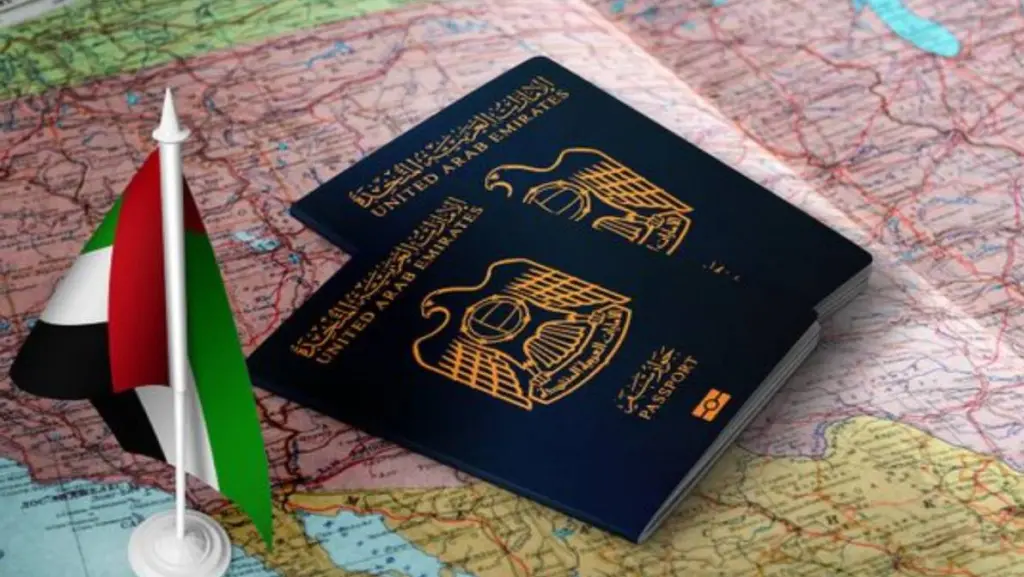
The news made headlines across the UAE in May 2026: the Emirati passport had climbed to fifth place in the global passport rankings, granting visa-free or visa-on-arrival access to 185 countries. For UAE nationals, this is a genuine milestone. Travelling to Europe, the UK, the United States, and dozens of other destinations has never been more frictionless for Emirati passport holders.
But Dubai is a city where nearly 90 percent of the population are expatriates. Skilled professionals, business owners, healthcare workers, engineers, and their families from India, Pakistan, the Philippines, Egypt, Jordan, Russia, and over 180 other countries make up the overwhelming majority of the city’s 3.5 million residents.
For them, the Emirati passport ranking is a piece of good news about a document they do not hold. Their own passport’s travel access is a different story, and for most of the world’s nationalities, international travel from Dubai still requires careful advance planning around one specific step: the visa.
Dubai International Airport is consistently ranked among the world’s busiest by international passenger volume. Residents of the UAE travel internationally at unusually high rates compared to most populations, partly because so many of them maintain strong ties to their home countries, and partly because Dubai’s central geographic position and its airline connections make long-haul travel unusually accessible.
A South Asian professional based in Dubai has direct access to Europe, the UK, North America, East Africa, Southeast Asia, and the Far East within a single hub. The logistics of international travel from Dubai are genuinely excellent.
The variable is the visa. For nationals of India, Pakistan, the Philippines, Bangladesh, Sri Lanka, Nepal, Egypt, Nigeria, and dozens of other countries, visiting Europe, the UK, or the United States requires a visa application submitted in advance. The UAE residence visa makes this possible from within the Emirates, which is a significant practical advantage over applying from a home country. But it does not remove the requirement or compress the timeline.
For the most common travel visa categories needed by Dubai’s expat population, the process looks like this.
Schengen visa (27 European countries). Applications are submitted through the embassy of the country where the traveller will spend the most nights, processed at VFS Global or BLS International (for Spain) or TLScontact (for France) in Dubai or Abu Dhabi. Standard processing is 15 working days from the biometric appointment date. Documents required include three months of personal bank statements, salary certificate, travel insurance with minimum 30,000 euros coverage, hotel bookings, return flight reservation, and a cover letter. During peak summer months, processing can extend to 25 or 40 working days at the busiest embassies.
UK Standard Visitor Visa. The UK has operated a completely separate immigration system since Brexit. A Schengen visa provides no access to the UK. Applications go through UKVI online and biometrics at VFS Global in Dubai or Abu Dhabi. Standard processing is 15 working days, with Priority Service available at additional cost. The UK requires six months of bank statements, which is twice the Schengen standard and a detail that catches many applicants off guard.
US B1/B2 Visa. The US tourist and business visa requires a personal interview at the US Embassy in Abu Dhabi or the US Consulate General in Dubai. Processing time after the interview varies. Appointment availability has fluctuated in recent years and has been a bottleneck for UAE-based applicants at various points.
These three categories cover the majority of travel visa applications originating from Dubai. The mechanics are straightforward but require lead time that many travellers, particularly those from countries with visa-free travel habits, underestimate.
The gap between deciding to travel and submitting a visa application is where most problems originate. For residents whose own passports allow visa-free entry to popular destinations, the habit of booking a trip first and handling administrative details later works fine. For residents from visa-required countries, the habit creates a predictable problem every summer and every December.
A Schengen application submitted four weeks before a July departure is already operating with minimal margin. Five to six weeks is the minimum advisable lead time for peak-season applications to popular Schengen destinations. Eight weeks is safer. For UK visas, similar timelines apply with the added variable of Priority Service availability.
The travellers who run into problems are almost never people who did not know a visa was needed. They are people who knew but started the process three weeks before travel because that is how they have always approached trip planning, and it has never caused a problem before.
Residents planning Europe trips in 2026 are entering a meaningfully different border environment than in previous years.
The EU Entry/Exit System (EES) reached full operation in April 2026, replacing manual passport stamps with biometric registration at Schengen borders. Every entry and exit is now digitally recorded. The 90-days-in-180 rule, previously tracked through manual stamps that could be ambiguous or missing, is now calculated automatically in real time. Travellers who have been imprecise about their day count in previous years no longer have that margin.
The ETIAS electronic travel authorisation system is expected to launch in late 2026. It applies to visa-exempt travellers, not to those who already require a full Schengen visa application. For Dubai’s expat population from visa-required countries, ETIAS adds nothing to an already-existing requirement. But for UAE nationals and passport holders from visa-exempt countries, it adds a pre-registration step.
The net effect for most of Dubai’s expat residents: the application process is the same, but the consequences of visa problems or overstays at the destination are now more precisely recorded and more consequential.
A refused visa application costs more than the application fee. It means losing non-refundable travel bookings, missing a trip that may have been months in planning, and having a refusal on record that must be declared in every subsequent application to the same country.
The most reliable protection against refusal is thorough preparation on the first submission. Every document in the correct format, the correct bank statement period, travel insurance with zero deductible, hotel bookings covering every night of the trip, and a cover letter that addresses the specific concerns the caseworker will have about the specific applicant profile.
For Dubai residents managing visa applications alongside full professional and family lives, professional visa services remove the research overhead and eliminate the most common technical errors. Oki-Doki is a Dubai-licensed agency (licence 72623) covering the full range of travel visa categories from the UAE, with a stated 98 percent approval rate and a 5.0 Google rating across their client base.
For expats who travel internationally from Dubai on a regular basis, each successful visa application is also an investment in the next one. Schengen embassies issue multi-year multiple-entry visas to repeat applicants with clean travel histories. UK UKVI has a similar progression. Consistent, well-prepared applications over two or three cycles typically result in five or ten-year multiple-entry visas that remove most of the visa planning overhead from future trips.
The UAE passport’s fifth-place global ranking reflects a decade of diplomatic investment by the UAE government in visa-free access for Emirati citizens. For the millions of Dubai residents who hold other passports, the equivalent investment is in building a clean, consistent visa application history from the UAE, which over time delivers a similar practical result: fewer obstacles, faster decisions, and more of the trip spent on the trip itself.
This article reflects travel visa requirements from the UAE as of 2026. Requirements, processing times, and fees are subject to change. Verify current information with the relevant embassy or a licensed UAE visa agency before booking travel.