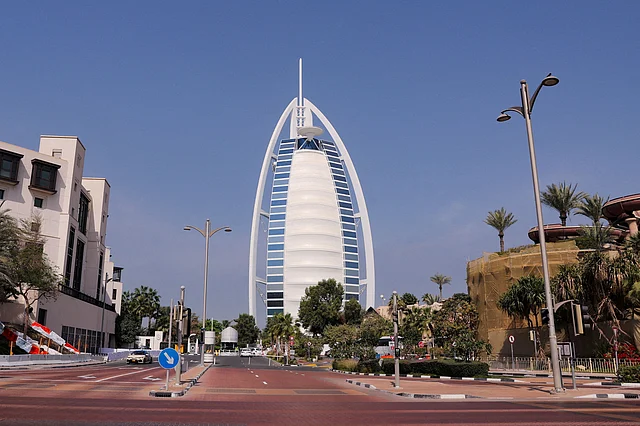
The 56-floor sail-shaped hotel, which opened in the late 1990s on an artificial island off Jumeirah Beach, will undergo what architects describe as a “forensic and surgical” intervention affecting every core system—from façade and structure to mechanical, electrical and plumbing infrastructure.
Why a Full Closure Was Necessary
“From an architectural and technical standpoint, a full closure at Burj Al Arab typically indicates building-wide interventions that cannot be phased without compromising safety, performance, or guest experience,” explains Shivarao C, Managing Director at ADS Global Design Ventures.
The work involves main systems that keep the building running—air-conditioning, plumbing, electricals, lifts, fire safety—as well as façade or structural works that cut across multiple floors simultaneously. “A complete shutdown allows for a higher level of precision, ensuring the asset is comprehensively renewed rather than incrementally patched,” he adds.
Dubai-based architect Marmar Al Hilali notes that Burj Al Arab “operates as a fully integrated system rather than isolated components.” Major interventions require “simultaneous access across multiple zones,” making partial occupancy “operationally and technically unviable.”
Architect Ruby Fahmi describes the decision as indicative of deep infrastructure work: “An 18-month closure signals that the work is happening at the level of the building’s core intelligence, not just the surface. You’re not just upgrading certain parts, you’re resetting the system as a whole.”
The Restoration Process
The project will be led by French interior architect Tristan Auer, known for his work on Paris landmarks including the Hôtel de Crillon. The brief is to refresh interiors, enhance performance and prepare the hotel for future luxury standards while maintaining its intrinsic essence.
“Restoration at this scale is an exercise in precision, removing what no longer performs, upgrading what must evolve and protecting what defines its identity. The real challenge is knowing what not to touch,” says Fahmi.
In practical terms, the work includes checking and repairing the sail-like façade, testing the structure for corrosion from salt and humidity, overhauling all mechanical and electrical systems, and carefully restoring bespoke finishes like stone, metalwork, joinery and gold detailing.
Jumeirah has promised that changes will be “almost invisible” to guests—a commitment that suggests highly controlled intervention beneath an unchanged visual identity. “If it’s successful, the guest won’t notice the change visually, they’ll feel it as effortlessness,” Fahmi explains.
The 25-Year Inflection Point
For a building of this intensity in a marine environment, the 20-25 year mark represents a natural inflection point. Salt, wind, humidity and round-the-clock operation accelerate wear on systems, façade and materials.
“Around 25 years is when high-intensity buildings fall out of sync with contemporary performance standards, especially in marine environments,” says Fahmi, adding that sustainability and cutting-edge technology are expected to be keywords in this restoration.
Al Hilali points to both environmental degradation and shifting brand cycles: “It reflects a convergence between material lifecycle and a reset in market expectations” around sustainability, technology and luxury.
Dubai’s Shift from Building to Preserving Icons
The restoration signals a clear evolution in Dubai’s urban development strategy. “Rather than replacing early landmarks with newer, shinier ones, the city is now refining and future-proofing them, ensuring they remain relevant within a far more competitive global luxury landscape,” says Shivarao.
“The Burj Al Arab once defined Dubai’s ambition, this restoration reflects its maturity,” adds Fahmi. “The city is moving from creating icons to curating them and that’s what gives architecture long-term cultural value.”
Al Hilali describes it as “a shift from growth-driven architecture to heritage-conscious development, even within a relatively young city.” The restoration represents “longevity planning and the cultural preservation of early icons”—a maturation phase the profession has long anticipated, particularly as Dubai continues expanding infrastructure across the emirate.
The hotel’s 202 suites across 56 floors will remain closed until late 2027, when guests are expected to return to an experience that feels unchanged yet performs at contemporary standards.